Sign in to your Account at Dow
Sign in with your account details to get access to our exclusive content.
Why Register?

Product Information
Access datasheets, exclusive content and applications

Samples
Request Samples to support formulation work
Stay Updated
Receive the latest news about products, news and more!


Looking Ahead
How do you prepare for the future of mobility - and beyond?
Discover the future of the mobility industries with MobilityScience™ - looking beyond the horizon for sustainability and efficiency.
Dow is shaping the road to tomorrow
The mobility industry is evolving rapidly and staying ahead demands fresh perspective and collaboration across the whole ecosystem. Dow’s MobilityScience™ team delivers expert insights on the latest trends, challenges, and breakthroughs shaping the future of mobility. Through our video series The Road Ahead, in-depth industry analysis, and expert spotlights, we will provide our distinct outlook to help you navigate what’s next.
The Road Ahead video series
The Road Ahead presented by Dow MobilityScience™ is your inside track on the trends shaping the automotive industry, from global investment in electrification to battery breakthroughs and market-driven tech shifts.
Hosted by Ryan Smith, Business Director at Dow MobilityScience™, the video series draws on his experience in product innovation, transportation and supply chain to deliver sharp insights on science, sustainability and performance. The Road Ahead was developed to help brand owners, OEMs and industry leaders navigate the challenges and opportunities defining the future of mobility and stay ahead in an evolving landscape.
Watch the latest episode below. New episodes will be released throughout the year, so please check back often.
How to Charge Up America's Future in Battery
At the Future of Battery Summit, Ryan Smith speaks with industry expert Bob Galyen to unpack the true state of battery technology in the US, exploring the supply chain realities and technical gaps that must be closed to compete globally. Drawing on his experience at General Motors, Delphi, Magna and CATL, Galyen shares what he believes propelled China to battery dominance and what it will take to build a world-leading battery ecosystem in the US.
How can the battery industry overcome typical challenges?
Explore how North America’s battery industry can build competitiveness by focusing on practical execution, scalable manufacturing and sustainable growth beyond subsidies.
How will the U.S develop a resilient, domestic battery ecosystem?
Discover opportunities to strengthen the U.S. battery ecosystem through domestic materials production, mineral processing and investment in advanced manufacturing.
What makes you optimistic about the future of battery in North America?
Hear why battery leaders are optimistic about North America’s future, and how continued collaboration, domestic investment and innovation can maintain momentum.
What innovations will pave the way for greater battery performance?
Explore how advances in materials science, from new polymers to graphene additives and surface treatments, could unlock greater battery performance.
Battery innovation: What's possible today versus in the future?
Explore what battery innovation can deliver today and how future technologies could transform performance, cost, safety and manufacturing processes.
How does Formula E accelerate EV innovation?
Join us trackside at the Miami E-Prix to explore how Formula E acts as a high-speed R&D lab for EV technology – driving rapid advancements in energy efficiency, powertrain design, thermal management and materials science that can move from the racetrack to EV production. Featuring insights from Dow’s Ryan Smith and Joel McDonald, and JLR’s Ryan Taylor, the conversation covers how extreme racing conditions, fast development cycles and collaboration can help accelerate the global transition to electric mobility.
Episode 6: Electrification, Competition, & Opportunity
Explore China's fast-evolving automotive market with Yudong Qi, Key Account Technical Director, Dow Asia Pacific Mobility. From EVs surpassing 55% market share to rapid battery innovation, smart vehicle features, and global OEM expansion, this episode unpacks how Dow's collaboration, advanced materials, and thermal management solutions are shaping China's leadership in sustainable, electrified mobility.
Episode 5: Inside the Battery Show North America
Jeroen Bello, Global Marketing Senior Director for Dow MobilityScience™, discusses how Dow is advancing safer, smarter, and more sustainable batteries right from the floor of Battery Show North America. Innovative materials like fire-resistant coatings, foam sheets, and thermal management solutions protect passengers, optimize performance, and enable circularity in electric and hybrid vehicles. The episode also explores how mobility intelligence and connectivity are transforming vehicles into safer, more efficient, and fully integrated digital platforms.
Episode 4: Europe's Shift: Policy, Partnership, Progress
Dr. Esther Quintanilla, Global MobilityScience™ Marketing Director at Dow, explores Europe's 2025 automotive market – rising EV adoption, electrification, competitive pressures and regulatory shifts. She highlights how OEMs are accelerating innovation, strengthening supply chains, investing in recycling and sustainable materials, and collaborating across the value chain to build a more efficient, future-proof ecosystem.
Episode 3: The Grit to Evolve
North America’s auto market is evolving fast. SUV and hybrid demand is rising while EV growth faces hurdles like charging infrastructure and range anxiety. In this episode, we explore how OEMs and EV-first startups are adapting with electrification and strategic collaborations and consolidation, working towards a future that’s more connected, autonomous and eco-friendly.
Episode 2: Reinventing the Ride
Learn how technology is transforming automotive interiors with a focus on safer materials, circularity, and climate protection. In this episode, Mark Allen, Principal Technical Service and Development Scientist at Dow, shares how Dow MobilityScience™ helps OEMs meet consumer demand for low-odor, luxurious, and sustainable interiors with innovations like EVOAIR™ and LUXSENSE™, and partnerships like Adient-Jaguar Land Rover to advance circular solutions.
Episode 1: The Driving Forces Shaping Mobility
Explore the recent trends shaping the industry. First, electrification is accelerating due to falling battery costs, global investment in innovation, and government support like EV tax credits, infrastructure, and policy shifts. Second, autonomous driving is advancing, with most vehicles at Level 2+ and countries like China, Germany, and Japan developing AV-friendly regulations. Finally, sustainability remains a priority for automakers with renewable energy, recycling, and circular solutions.
Dow expert insights on mobility trends and challenges

Working together to drive the economy and mobility industry forward
In this episode of The Michigan Opportunity, Ryan Smith, Business Director at Dow MobilityScience™, speaks with host Ed Clemente about the accelerating convergence of electrification, autonomous driving, sustainability and global competition reshaping the automotive sector. Ryan explores how advanced materials are enabling this transition and pulls back the curtain on Dow's internal venture capital team and technology scouts engaging with startups and university spinouts like the University of Michigan Battery Lab to identify tomorrow's mobility solutions.

Dow expert spotlight: Jennifer Kempf on the future of mobility
Jennifer Kempf, President, Dow MobilityScience™, was named on the 2026 Reuters list for Trailblazing Women, which recognizes the most impactful leaders shaping the global economy. Selected among 11,000 nominees, Kempf was evaluated on her professional achievements, social impact and influence. Learn more about Reuters Events: Trailblazing Women of 2026.
Before her 2025 IAA Mobility keynote, Kempf answered questions on the future of mobility – the challenges and opportunities. Read some of her responses below about how Dow is helping the industry navigate the shifts ahead. To read the full interview, visit IAA Voices.
Advanced materials will continue to play a critical role in enabling the next generation of urban mobility. The evolution of battery architecture – like cell-to-pack and cell-to-vehicle designs – is transforming how we think about performance and efficiency. But these innovations only succeed with the right materials: adhesives, foams, potting and sealants that can handle tight spaces, high heat, and long-term durability. As shared and autonomous fleets grow, the pressure to deliver smarter, lighter, and safer systems will intensify. Materials science is the quiet enabler behind that progress, and it’s thrilling to be part of it.
Balancing performance, safety, and sustainability is a constant challenge – especially as EV designs become more complex. To meet that challenge, we continue to invest in our localized production hubs and to applying a systems approach across the vehicle lifecycle, from material design and component engineering to recycling infrastructure and end-of-life recovery.
At the same time, the regulatory landscape is evolving rapidly. We’re seeing growing pressure to meet stricter environmental and safety standards across regions, which adds complexity but also creates opportunities for innovation. We’re aligning our innovation pipeline with evolving policy frameworks and actively engaging with regulators and industry partners to help shape realistic, science-based policies that support progress without compromising feasibility.
We have a hugely exciting opportunity to help educate the public on how materials science companies like us are helping the industry rethink how vehicles are designed, to help move business’ sustainability credentials further forward. Many consumers make their own choices in sustainable living, so it’s important for us to be able to show the good work that’s being done for them to make decisions they feel are informed. For decades, simple deconstruction at the end of vehicles’ service-life was not a primary consideration; it has been difficult to separate materials, and the use of certain fixing techniques to bind them together has made recycling and waste reduction a significant challenge.
We’ve made it our mission to work with the industry to reset the wheel in this respect. An end-to-end approach with circularity in mind – starting with material formulation, through to production, installation in vehicles, and eventually re-use – is what’s required to effect change; adjusting individual components in this process is not efficient and won’t achieve the results required to make meaningful progress. It’s hugely motivating for us to be able to share the breakthroughs we are making to help the industry take steps towards meeting its sustainability obligations, both in the near- and long-term future.
The EV battery pack holds great potential here, and there is a continuous need for innovation and improvement in the technology involved. It’s the heart of the vehicle and the major contributor to cost and emissions. By rethinking how batteries are made, used, and reused, we can unlock massive sustainability gains. But it will take cross-industry collaboration – OEMs, suppliers, recyclers, and regulators working together – to make that vision a reality.
AI’s transformative impact on mobility
Artificial intelligence is revolutionizing the mobility industry, driving advancements in safety, efficiency, and sustainability. From autonomous driving and predictive maintenance to material innovation and emissions reduction, AI enables faster, data-driven decision-making that reshapes how vehicles are designed, manufactured, and experienced. One key area of innovation is in-vehicle materials, where AI-driven modeling is optimizing everything from structural performance to environmental impact.
Dow is transforming material science with AI, creating SPECFLEX™, a breakthrough polyurethane solution that enhances in-cabin air quality. Using AI-driven predictive modeling, Dow identified and reduced volatile organic compounds (VOCs) and odors in vehicle interiors. This technology delivers results faster and more accurately than ever before.
Key achievements include:
- 60-80% reduction in aldehydes from polyurethane foam off-gassing
- 50%+ decrease in total VOC emissions
- Innovation timelines cut from years to months
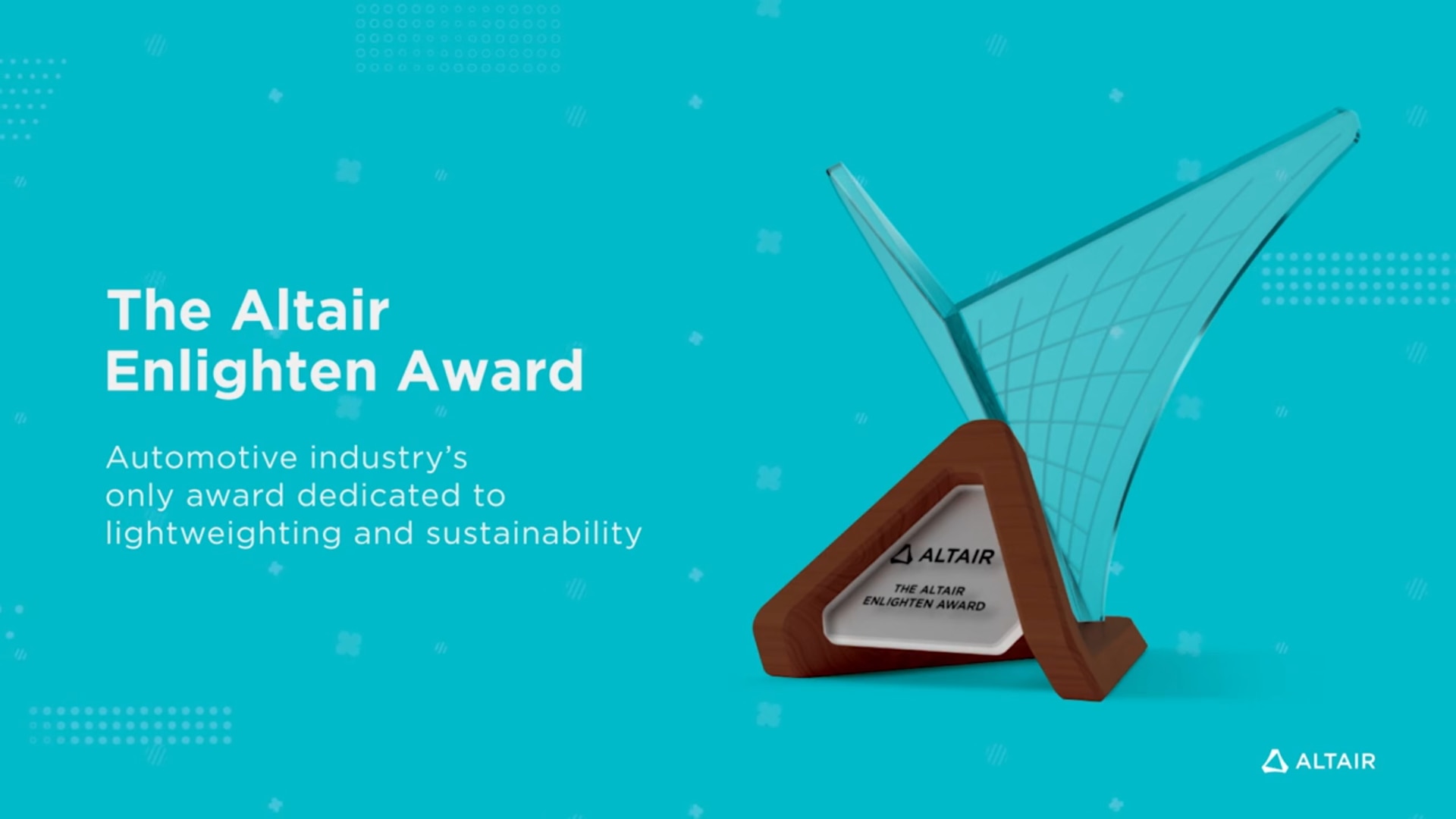
This AI-powered approach has led to a safer, smarter, and more sustainable solution, earning Dow the 2024 Altair Enlighten Award and reinforcing its leadership in mobility innovation.
Questions about Dow Mobility products and capabilities? Get in touch with a representative.